
Volume 11 Issue 4 April 2020 Washington State Edition

New Zealand is a country of gracious people, amazing scenery, and highly productive irrigated agriculture. New Zealanders, or Kiwis, face many of the same irrigation challenges that Americans do, though in some cases they have come up with new and innovative solutions that Americans can learn from. All this was on display during Irrigation […]
Volume 11 Issue 3 March2020
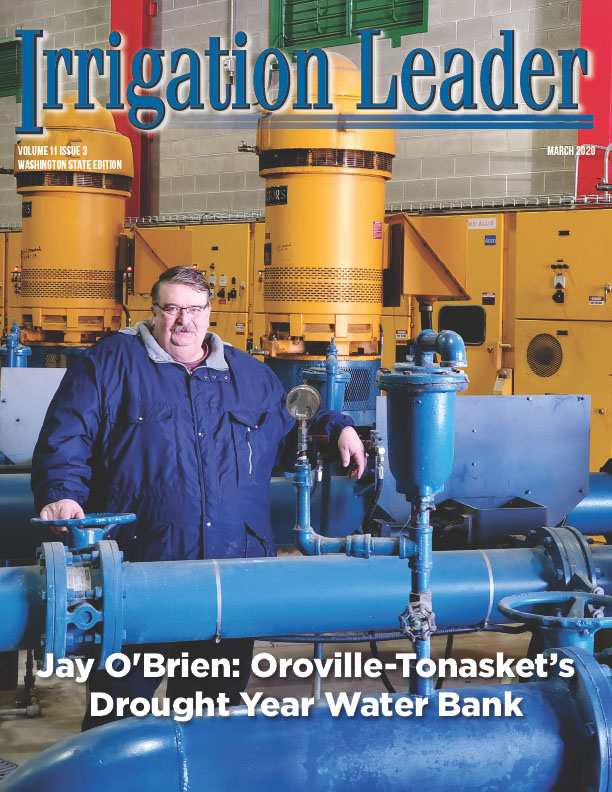
In our cover story this month, Jay O’Brien of the Oroville- Tonasket Irrigation District tell us about how his district is putting its unused water in trust and using it to gain revenue while also helping water users in need downstream. It is a promising setup that will be of interest to other Washington […]
Volume 11 Issue 2 February 2020
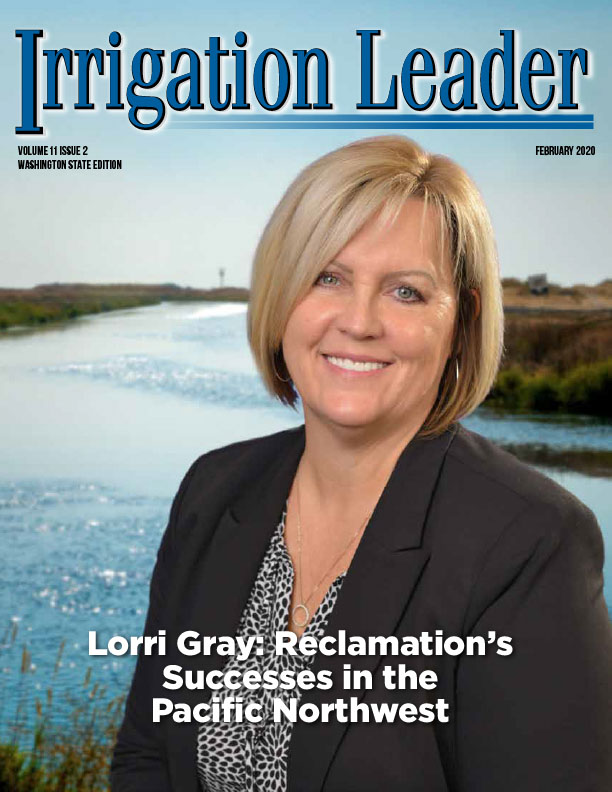
Lorri Gray has been working for the Bureau of Reclamation since high school. Today the director of the Columbia–Pacific Northwest region, she knows the agency inside and out, and it is always a pleasure—and an educational experience—to speak with her. In our cover story, she talks about the Odessa Groundwater Replacement Plan, the Yakima […]
Volume 11 Issue 1 January 2020
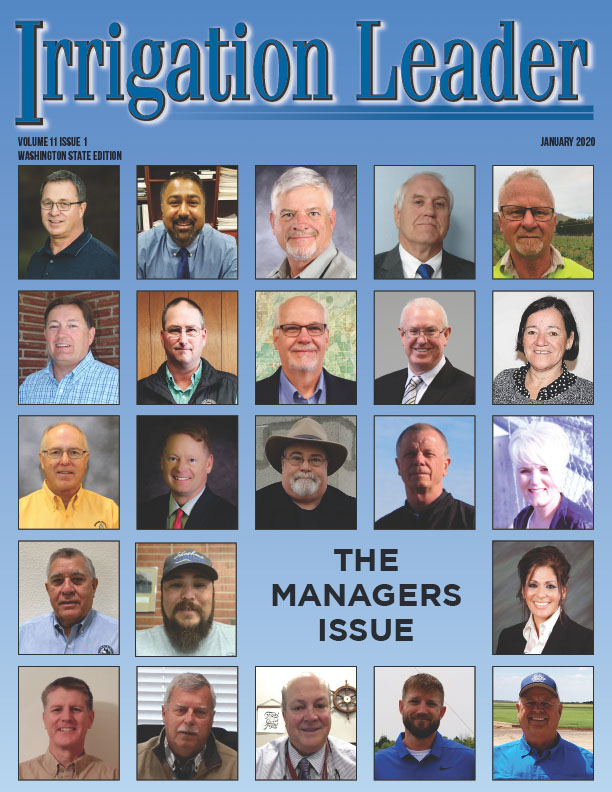
The irrigation that makes agriculture in the West so productive could not exist without irrigation districts. And no irrigation district could function without the presence of a manager. Irrigation district managers must understand everything from 100-year-old concrete infrastructure to cutting-edge supervisory control and data acquisition systems. They must manage relationships with boards of directors, […]
Volume 10 Issue 10 November/December Washington Edition 2019
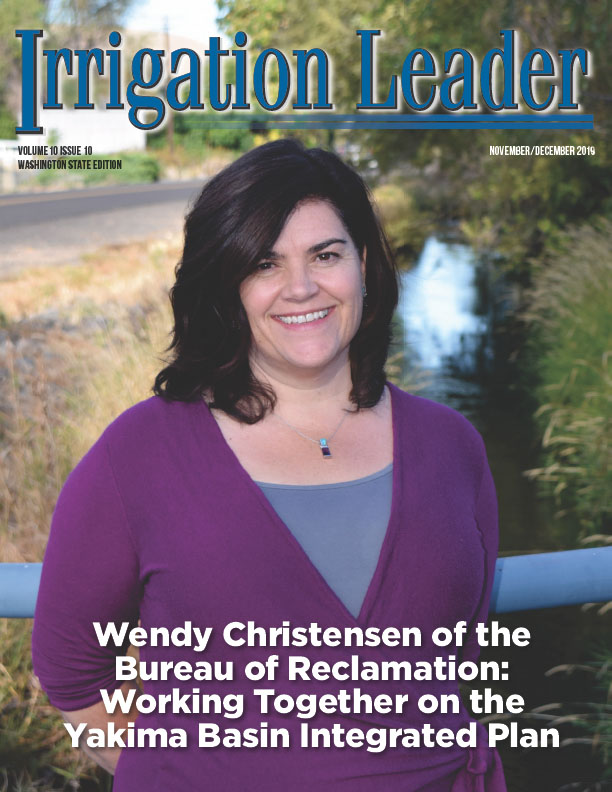
The Yakima Basin Integrated Plan (YBIP) is an impressive feat of coordination and cooperation. Its basic aim is simple—to guarantee enough water for people, fish, and agriculture—but behind that simple summary there are many parties, many interests, and a lot of history. With the leadership of the Bureau of Reclamation and the Washington Department […]
Giving Back to the Community as a Member of the KID Board of Directors
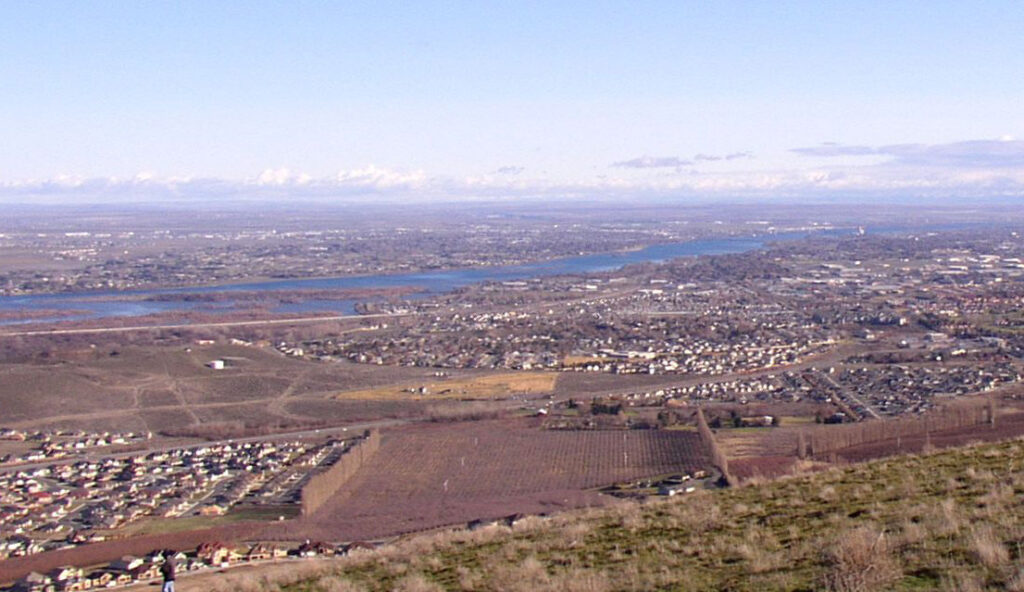
Raman Venkata came to the United States in 1968 as a graduate research engineering assistant studying at Washington University in St. Louis, Missouri. Over the next 50 years, he worked for multiple nuclear engineering firms and for the U.S. Department of Energy (DOE) before retiring and being elected to a spot on the Kennewick Irrigation […]
Volume 10 Issue 9 October 2019
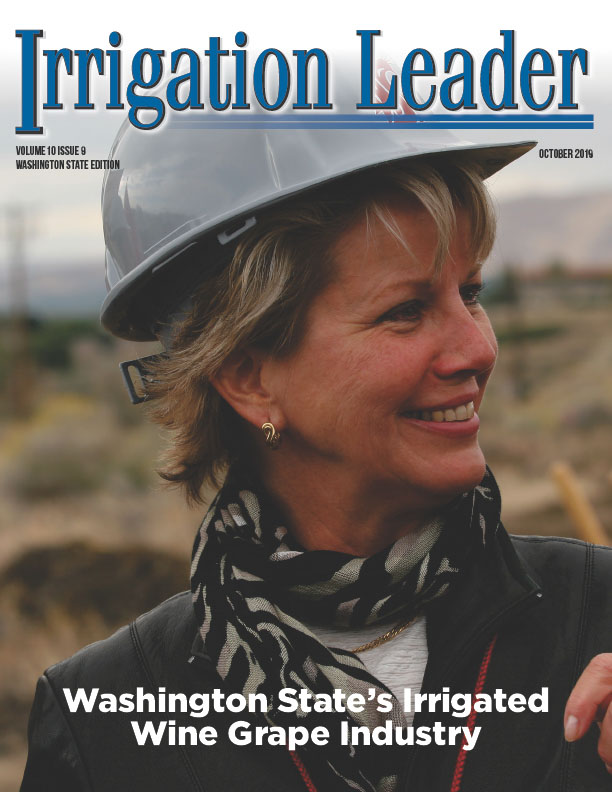
The Washington Winegrowers is the association that represents one of Washington State’s most exciting irrigated crops: wine grapes. In this month’s cover story, I interview Vicky Scharlau, the group’s executive director, about trends in the wine grape world and about irrigation’s crucial role in expanding and advancing Washington State’s high-quality wine industry. Much of […]
Volume 10 Issue 8 September 2019 WA
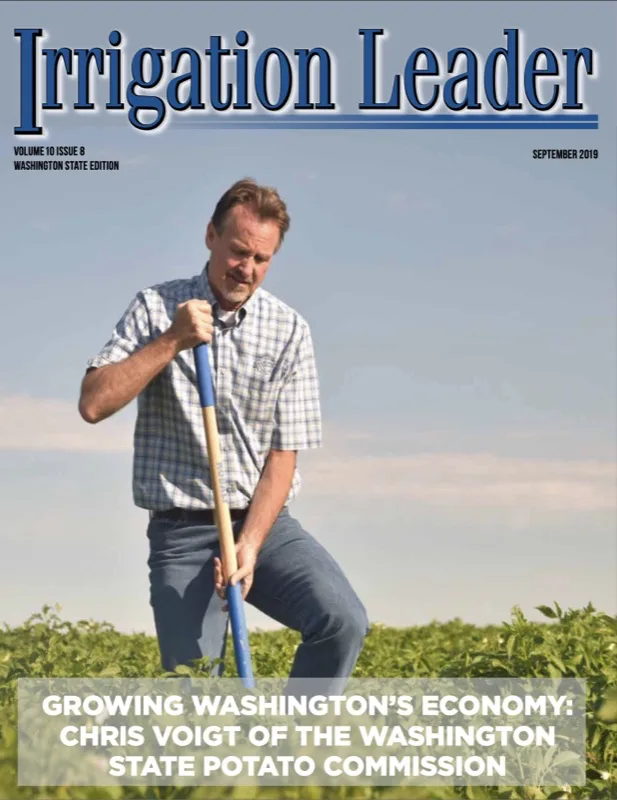
The cultivation of potatoes—one of Washington State’s top crops, supporting 36,000 jobs in the state—is directly dependent on irrigation infrastructure and technology. Columbia River water has turned the desert landscape of central Washington into a bounteous agricultural region. In this month’s cover story, Chris Voigt, the director of the Washington State Potato Commission, tells […]
Growing Washington’s Economy: Chris Voigt of the Washington State Potato Commission
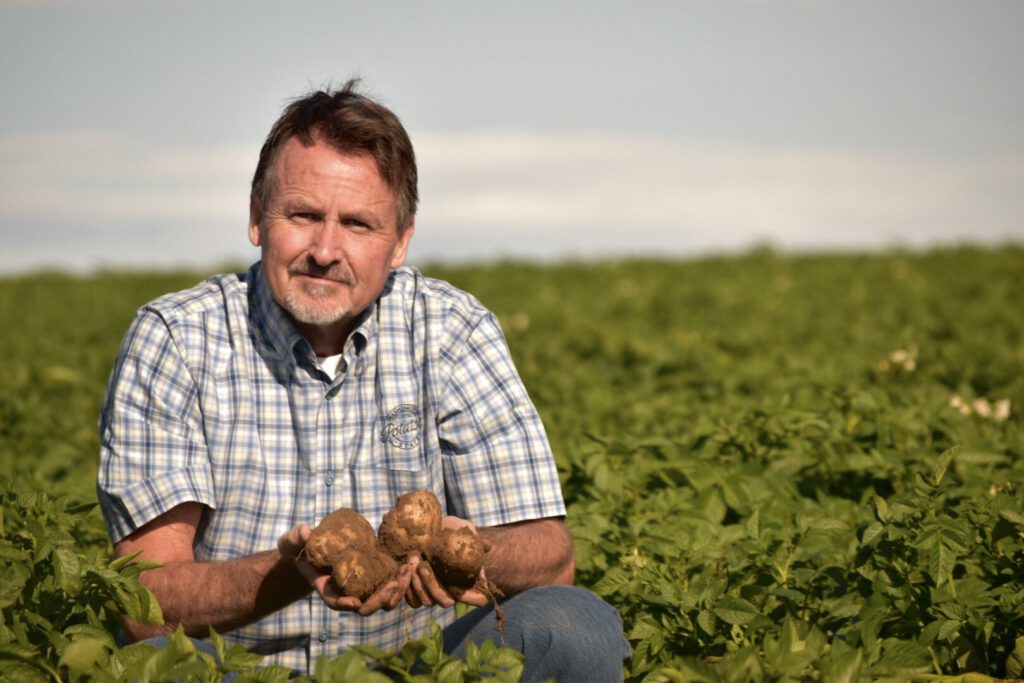
Potatoes are one of Washington State’s top crops. Grown primarily in central Washington with Columbia River that point, potatoes are directly dependent on irrigation infrastructure and technology. The cultivation and processing Potato provides 36,000 jobs to Washington State. Growers and worked there for about 3 years. The Washington State Potato Commission is the industry association responsible […]
Volume 10 Issue 8 August Washington Edition 2019
The cultivation of potatoes—one of Washington State’s top crops, supporting 36,000 jobs in the state—is directly dependent on irrigation infrastructure and technology. Columbia River water has turned the desert landscape of central Washington into a bounteous agricultural region. In this month’s cover story, Chris Voigt, the director of the Washington State Potato Commission, tells us about […]